

Blog
How to Tell if Sterling Silver Is Real: 925 Test Guide

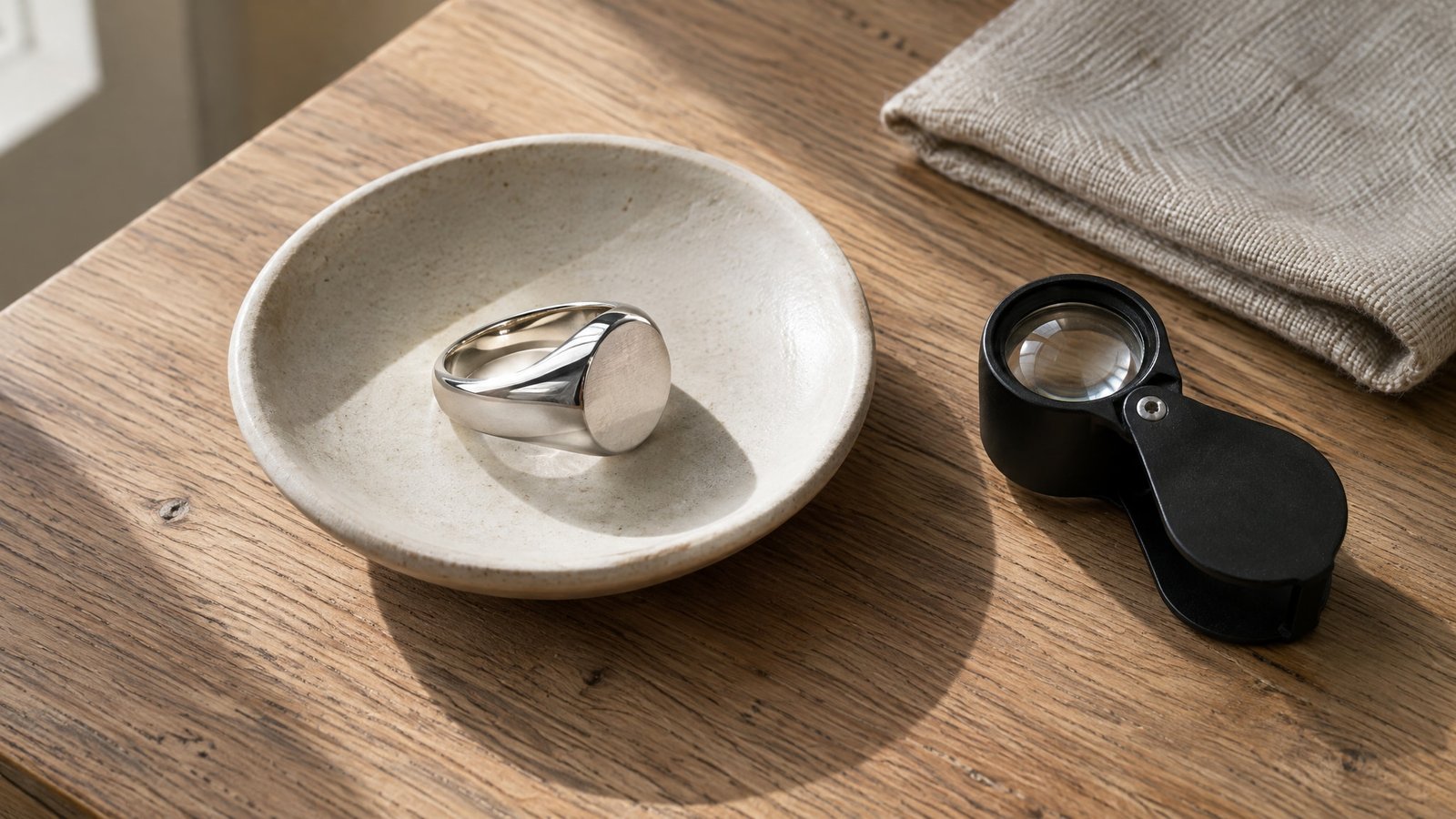
You are about to buy a silver ring online, or you have inherited a chain with no box and no story. Either way, you want a straight answer on how to tell if sterling silver is real, without hauling it to a pawn shop. This guide covers what the 925 stamp promises, what you can check at your desk, when a jeweler is worth the visit, and what to look for on a product page before you order.
One thing up front: no single check proves a piece is sterling. The reliable approach is to stack several small clues until they agree.
What the 925 Silver Stamp Means
The number 925 marks sterling silver, which is at least 92.5% silver by weight. Copper usually makes up the rest. In the United States, the Federal Trade Commission’s Jewelry Guides use that same 92.5% threshold for the term “sterling silver.”
The stamp tells you about metal content and nothing else. It says nothing about whether a ring is well designed, well finished or well made, so a clean 925 mark on a thin, poorly polished piece is still just that.
Why Sterling Silver Contains Copper
Pure silver is too soft for jewelry that gets worn every day. A ring made from it would dent, bend and lose its shape within months, and a thin chain would stretch at the links.
Alloying the silver with a small share of copper stiffens it, so a signet ring keeps its edges and a clasp keeps closing. Because the copper is mixed through the whole piece, solid sterling looks the same silver color from surface to core. That detail matters later, when we look at plating.
Reading a Sterling Silver Hallmark
A genuine mark is crisp and evenly struck. The letters or numbers should have clean edges and consistent depth, and they should sit naturally within the piece instead of looking pressed in as an afterthought. A smeared, lopsided or oddly shallow stamp on an otherwise sharp ring deserves a second look.
Keep the limit of a stamp in mind, though. A sterling silver hallmark is the maker’s claim about the metal, not independent proof, and anyone with a stamping tool can apply one.
Where the Stamp Usually Sits
Makers put the mark where it will not interfere with the design. You are most likely to find it in these places:
- Inside the band of a ring
- On the clasp or a small tag at the end of a chain
- On the back of a pendant
- On the post of an earring
The wording varies. You may see 925, STERLING, STER or S925, and all of them point to the same standard. If you are shopping for chains, our 925 buying tips for station necklaces explain why the clasp or tag is the first place to look, since the links themselves are too small to stamp.
Look-Alike Terms That Are Not Sterling
Some labels sound like silver but contain none. Nickel silver and German silver are base-metal alloys, usually copper, nickel and zinc, and “silver-tone” only describes the color. None of them contains sterling at all.
This is why the wording on a listing matters as much as the stamp on the piece. Katre Silver’s handcrafted rings are described as solid 925 sterling silver, and that is the plain phrasing you should expect from any seller. If a description says “silver finish” or “silver look” and never names the metal, treat that as a reason to ask questions before you buy.
How to Tell Real Sterling Silver at Home
A few checks at home cost nothing and leave no mark on the piece. They cannot confirm sterling, but they are good at flagging a piece that is not.
Quick Checks That Leave No Mark
The magnet. Sterling silver is not magnetic. If a magnet clearly pulls the piece toward it, the metal is probably steel or another iron-based material. Test the body of the piece rather than the clasp, because small springs inside clasps are sometimes steel even on genuine silver.
The weight. Solid silver feels dense for its size. A bold ring that feels light and hollow in your palm may be plated base metal or a thin shell, although a light feel alone proves nothing, since a slim band is naturally light.
The tarnish. Real silver darkens over time as it reacts with sulfur in the air. That makes tarnish a mild point in a piece’s favor, but plated metal can tarnish too, so a dark patch tells you less than you might hope.
A piece that passes all three is still only “not obviously wrong.” That is useful, but it is not a verdict.
Wear Points That Reveal Plating
Plating wears first where the piece rubs, snags or flexes. Look closely at clasps, the edges of chain links, the inside of a ring shank and any raised corners.
If a yellow, coppery or grayish base metal shows through at those spots, you are looking at a thin silver-colored coating rather than solid sterling. Solid sterling keeps the same silver color all the way through, so a worn edge just looks like a worn edge. A good lamp and a loupe or phone camera zoom make this much easier to see.
Professional Testing and Tests to Avoid
When a piece is expensive or has sentimental value, a jeweler’s X-ray fluorescence (XRF) reading is the more reliable route. The machine reads the metal content of the surface without scratching or marking it, so you get a firmer answer than any home check can give you.
It has one blind spot. XRF only reads the surface, so a thick layer of silver plating over base metal can still mislead it. Ask the jeweler how deep the reading goes, and combine it with the wear-point check above.
Acid testing kits are the older method. They require a scratch or filed spot on the piece, which is a poor trade for a ring you plan to wear and keep.
Skip the kitchen tests too. Vinegar, bleach and the ice-cube trick you will find online do not reliably identify silver, and they can dull finishes or stain porous stones such as turquoise. If your piece has a gemstone, you gain nothing from risking it.
Craftsmanship Signs in Authentic 925 Silver Jewelry
Metal content is half the picture. The other half is how the piece was made, because careful workmanship tends to travel with honest materials. It is supporting evidence, not proof, but it is evidence you can judge with your own eyes.
Finish, Detail and Joins
Look at the Greek Key Ring Men, formally the Greek Key Ring Men, Bold 925 Sterling Silver Meander Pattern Onyx Ring, Vintage Handmade Gemstone Jewelry Gift for Him. A meander pattern is unforgiving, because every line has to run true and every turn has to stay sharp. On a well-made ring the lines are crisp, the polish is even across the band, and nothing looks rounded or muddy.
The Ottoman Ring Men signet ring, listed as the Ottoman Ring Men, Bold 925 Sterling Silver Handmade Vintage Turkish Signet Ring, Antique Style Jewelry Gift for Him, offers a different test. On an antique-style signet, check that the engraved detail stays clean at its edges and that the face sits flush with the shank.
Wherever parts join, such as a setting meeting a band or a bail meeting a pendant, the seam should be tidy, with no pits, gaps or blobs of solder. Rough joins on a piece that claims to be handmade by experienced hands are a warning sign.
What Handmade Does and Does Not Prove
Handmade tells you how a piece was shaped, not what it is made of. A skilled maker can work in nickel silver as easily as in sterling, so the word “handmade” cannot stand in for the metal description or the stamp.
What it does give you is context. Katre Silver is part of Besen Jewelry Co. a Turkish jewelry business established in 1995, with decades of experience in silver craftsmanship and gemstone design. A long-running workshop has a reputation to protect, and its pieces show it in the finish. Still, you should read that history as a reason to look closely, not as a replacement for checking.
Checking a Listing Before You Buy Online
When you cannot hold the piece, the product page does the work of the jeweler’s counter. A few specific details separate a clear listing from a vague one.
Use the Black Onyx Ring Men listing as a worked example. Its full title is Black Onyx Ring Men, Bold 925 Sterling Silver Handmade Knife Pattern Ottoman Signet Ring, Oval Faceted Gemstone Vintage Jewelry Gift for Him, and the description calls it a handcrafted ring made from solid 925 sterling silver. It names the stone and its cut, an oval faceted black onyx, and it offers ring sizes from 6 to 13 in half sizes.
What a Clear Sterling Listing Includes
Before you order, you want to see these things stated plainly:
- The metal, named as solid 925 sterling silver rather than “silver finish” or “silver look”
- Ring size options, so you are not guessing whether the fit will work
- A gemstone description that names the stone and its cut
- No plating language such as “silver plated” or “silver-tone,” which is a reason to look further
If you are curious about the stone itself, our guide to onyx ring meaning for men covers its symbolism, and the men’s sterling silver signet ring guide helps you compare styles once the metal is settled.
You can browse Katre Silver’s men’s rings and check the 925 sterling silver description and ring size options on the Black Onyx Ring Men listing before you order.
Caring for Sterling Silver So the Mark Stays Clear
Good care protects both the shine and the stamp. Wipe the piece with a soft, dry cloth after wearing it to remove skin oils, and use a mild, non-abrasive approach when it needs more. Heavy polishing is the thing to avoid, because repeated abrasion can slowly wear down a thin stamp until it is hard to read.
Store silver in an airtight bag or pouch, away from humidity, which speeds up tarnish. Keep perfume, chlorine and harsh household chemicals off the piece, and be especially careful with porous stones such as turquoise, which can absorb them and change in appearance.
Do any authenticity checks before you clean. Tarnish is one of the clues from earlier, and a freshly polished piece takes that clue away.
This guide cannot tell you for certain that a piece is sterling from photos or home checks alone. For anything valuable or irreplaceable, a jeweler’s XRF reading remains the firmest answer you can get.
Frequently asked questions
Is a 925 stamp enough to prove silver is real?
No. The stamp is the maker’s claim about the metal, and a stamp can be applied to plated or base-metal pieces. Treat it as a good starting point, then look at wear points, weight and finish, and have a jeweler run an XRF reading if the piece is valuable.
Does real sterling silver stick to a magnet?
No, sterling silver is not magnetic. If a magnet clearly pulls the body of a piece, the metal is probably steel or another iron-based material. A weak pull at a clasp can come from a steel spring, so test the main body of the piece.
Does real silver tarnish?
Yes, sterling silver darkens over time as it reacts with sulfur in the air. Plated metal can tarnish too, so tarnish only counts as a mild clue. Check it before you clean the piece, because polishing removes it.
Can I test silver at home with vinegar or bleach?
It is best not to. Vinegar, bleach and ice-cube tests do not reliably identify silver, and they can dull finishes or damage porous stones such as turquoise. A magnet, a close look at wear points and a jeweler’s XRF reading are safer.
What should an online listing say about the metal?
It should name the metal as solid 925 sterling silver, not just “silver finish” or “silver-tone.” It should also give ring size options and describe any gemstone clearly. Plating terms are a reason to look further before you order.